Whether delivered online or onsite, instructor-led live CI/CD (Continuous Integration / Continuous Delivery) training courses illustrate the core and advanced principles of CI/CD through interactive, hands-on practice.
CI/CD training is offered in two formats: "online live training" and "onsite live training". Online live training (also known as "remote live training") is conducted via an interactive remote desktop. Onsite live training can take place locally at the customer's premises in Lyon or at NobleProg's corporate training centers in Lyon.
NobleProg -- Your Local Training Provider
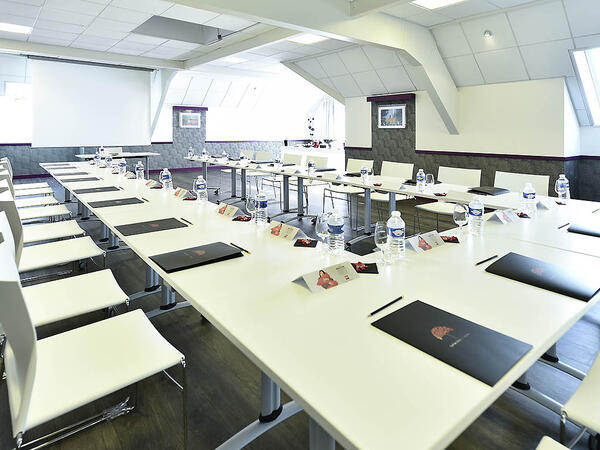
Lyon, Swisslife Tower
NobleProg Lyon, 10 Place Charles Béraudier, Lyon, france, 69000
Located 200 meters far from the train station TGV, Swisslife Tower is today the most representative building of this quarter of Lyon. The Business Center offers you a perfect location for your training.
Gares TGV
100meters from Gare TGV Part-Dieu , porte du Rhône Exit
Aéroport
30 minutes from Lyon Saint Exupéry (Satolas)
Rhône Express from Saint Exupéry airport (Terminus Gare part-Dieu)
This instructor-led, live training in Lyon (online or onsite) is designed for intermediate to advanced developers, DevOps professionals, and architects who aim to design, deploy, and manage resilient applications utilizing microservices, containers, and continuous integration/continuous deployment (CI/CD) pipelines.
By the end of this training, participants will be able to:
Understand and implement microservices architecture.
Deploy and manage containerized applications with Docker and Kubernetes.
Set up and optimize CI/CD pipelines for automated deployments.
Apply best practices for security, monitoring, and observability.
This instructor-led, live training in Lyon (online or onsite) covers advanced Jenkins configurations, security, and scaling techniques, and is aimed at DevOps engineers and software architects who wish to gain expertise in customizing Jenkins for complex software projects.
By the end of this training, participants will be able to:
Optimize Jenkins for enterprise-level software projects.
Implement advanced security measures.
Build complex and scalable pipelines.
Troubleshoot and maintain Jenkins installations effectively.
This instructor-led live training, delivered Lyon (online or onsite), is aimed at developers who wish to learn and apply the basics of Continuous Integration for Java.
By the end of this training, participants will be able to:
This instructor-led, live training in Lyon (online or onsite) covers the fundamental concepts and usage of Jenkins, and is aimed at software developers and DevOps engineers who wish to set up Jenkins, create and configure jobs, and automate key aspects of the software development process.
By the end of this training, participants will be able to:
Understand the principles of continuous integration and continuous delivery (CI/CD).
Install and configure Jenkins for software automation.
Create and manage Jenkins jobs for building and testing applications.
Set up and customize automated pipelines for software deployment.
SonarQube serves as a platform for the continuous inspection of code quality and security, leveraging static analysis and reporting tailored for developers.
This instructor-led live training (available online or onsite) targets intermediate-level developers, DevOps engineers, and security professionals looking to implement static code analysis, integrate SonarQube into Azure DevOps pipelines, and reinforce secure development practices.
By the conclusion of this training, participants will be able to:
Explain SonarQube's architecture, core functionalities, and security-focused rule sets.
Configure SonarScanner with prevalent build tools such as Maven, Gradle, and Ant.
Integrate SonarQube into Azure DevOps pipelines and import Azure Repos for continuous analysis.
Define and adjust analysis parameters, introduce custom rules via the SonarQube API, and interpret security reports.
Apply enhancements to secure development methodologies and clarify responsibilities within the CI/CD process.
Conduct hands-on analyses across sample repositories (Java + Quarkus and Angular) and address identified issues.
Format of the Course also allows for the evaluation of participants.
Interactive lecture and discussion.
Guided, practical hands-on labs utilizing real repositories.
Live configuration, testing, and troubleshooting within an Azure DevOps + SonarQube environment.
Course Customization Options
To request a customized version of this training (different language stacks, deeper DevOps integration, or expanded labs), please contact us to arrange.
This course offers comprehensive training on managing testing initiatives by leveraging the Selenium test suite and implementing continuous testing practices with Jenkins.
Target Audience:
Software test engineers
Software developers participating in agile development processes
Release managers
QA engineers
Upon completing the Selenium training, participants will be capable of:
Effectively applying the Selenium test suite in real-world projects
Utilizing Selenium for cross-browser testing
Distributing test execution using Selenium Grid
Executing regression tests with Selenium within Jenkins
Generating test reports and periodic summaries using Jenkins
This instructor-led live training in Lyon (online or onsite) is designed for engineers who wish to use Spinnaker to frequently and continuously deploy software to AWS or Kubernetes.
Upon completion of this training, participants will be able to:
Install and configure Spinnaker to support advanced operational requirements.
Integrate Spinnaker with existing continuous integration tools, such as Jenkins.
Gain a thorough understanding of Spinnaker's internal architecture and deployment workflow constructs.
Build pipelines for deploying software on Kubernetes.
Agile Software Testing encompasses a set of testing practices that provide timely and continuous feedback on software quality issues, adhering to the principles of agile development.
Continuous Integration (CI) involves all team members merging their work multiple times a day.
This instructor-led live training, held in Lyon (online or onsite), targets system administrators and developers seeking to utilize Argo CD for automating application deployment and lifecycle management.
By the conclusion of this training, participants will be able to automate, monitor, audit, and perform rollbacks on their Kubernetes systems using Argo CD.
This instructor-led, live training in Lyon (online or onsite) is aimed at developers who wish to build, test, deploy and monitor containerized software to the cloud, without having to provision or manage infrastructure.
By the end of this training, participants will be able to:
Understand and apply a configuration-as-code approach to setting up infrastructure.
Create custom configured Docker containers for deploying software applications to the cloud.
Deploy software to multiple environments.
Monitor deployments via the Bitbucket Pipelines Deployment Dashboard.
This instructor-led live training Lyon (online or onsite) is designed for developers and DevOps engineers who wish to build automation pipelines using CI/CD practices with Python.
By the conclusion of this training, participants will be able to:
Configure the necessary development environment to initiate the creation of CI/CD pipelines with Python.
Construct automated pipelines for testing and publishing Python packages using Travis-CI.
Automate the deployment of containerized applications using Docker and Heroku.
Continuous Integration (CI) is a software development practice where developers frequently merge their code changes into a central repository to identify and resolve defects promptly.
In this instructor-led live training, participants will acquire the fundamentals of implementing Continuous Integration for JavaScript by walking through the setup of a CI workflow for a JavaScript-based project.
Upon completion of this training, participants will be able to:
Grasp the core principles of Continuous Integration
Construct a personalized Continuous Integration environment for their JavaScript projects
Audience
Software Developers
IT Professionals
DevOps Engineers
Business Managers
Course Format
A blend of lectures, discussions, exercises, and extensive hands-on practice
This instructor-led, live training in Lyon (online or onsite) is designed for engineers who want to leverage open-source tools to automate the building, testing, and deployment of PHP applications and services.
Upon completion of this training, participants will be able to:
Install and configure various open-source tools to facilitate continuous integration, testing, and deployment.
Evaluate the benefits and limitations of adopting different open-source CI tools, such as GitLab CI and Jenkins.
Integrate CI tools with open-source frameworks for both unit and integration testing of PHP applications.
This course emphasizes hands-on implementation and the use of modern tooling. It builds upon a solid theoretical foundation (refer to the DEVOPS course) by concentrating on the latest tools and methodologies for executing DevOps principles.
This instructor-led live training in Lyon (online or onsite) is aimed at DevOps engineers who want to optimize and simplify the CI/CD process using Docker and Jenkins.
By the end of this training, participants will be able to:
Automate code delivery and pipeline deployment with Jenkins.
Build applications using Docker and Dockerfiles.
Configure authentication options to strengthen security.
This instructor-led live training in Lyon (online or onsite) targets DevOps engineers aiming to establish, deploy, and manage a Git-based software deployment workflow for their Kubernetes applications.
By the end of this training, participants will be able to:
Install and configure Spinnaker and Terraform.
Understand the benefits of GitOps over traditional CI/CD and Infrastructure-as-Code (IaC).
Move away from maintaining scripts. Configure and execute well-defined deployment process.
Apply best practices for cloud-native deployment, management, and monitoring.
Recover deployments from partial failures without manual intervention.
Create a GitOps strategy for application development.
This instructor-led, live training in Lyon covers the concepts, tools and techniques needed to carry out continuous integration of your software projects in an Agile environment. Participants carry out a series of hands-on exercises throughout the course to apply their knowledge in real situations. Interaction among instructor and participants is encouraged. Real-world cases are discussed and specific issues and questions are addressed and resolved in class.
This instructor-led live training in Lyon (online or on-site) is designed for engineers who wish to use Jenkins 2 to create pipelines that automate the process of moving an application from development to production.
By the end of this training, participants will be able to:
Install and configure Jenkins 2.
Adopt a script-based approach to automate every step of the software deployment process.
Automatically generate application builds when software is checked into a version control system.
Automatically initiate the compiling, testing, and packaging of a software application.
Quickly respond to notifications and reports when issues arise.
After developers complete a segment of code, they typically integrate it into the application, copy the application to a folder, run the installer, and then initialize the application to verify its expected behavior. This manual workflow is difficult to scale, is tedious, prone to errors, and lacks effective mechanisms for tracking changes throughout the process.
A superior alternative is to automate these steps using Continuous Integration. Continuous Integration encompasses the processes, tools, and infrastructure required to automate the building, deployment, and testing of software applications.
In this instructor-led, live training (available onsite or remotely), participants will learn how to transition from a traditional, manual (or semi-manual) software deployment approach to an agile, Continuous Integration (CI) workflow using Jenkins. Throughout the course, participants will engage in a series of hands-on, live-lab exercises, applying their new knowledge to various software development and deployment challenges at every stage. Interaction between the instructor and participants is encouraged. Real-world scenarios will be discussed, and specific issues and questions will be addressed and resolved during the training. The course places particular emphasis on .Net application development.
Upon completion of this training, participants will be able to:
Install and configure Jenkins for .Net application development.
Utilize Jenkins to automate the process of checking in and merging .Net source code into a repository.
Leverage Jenkins to automate the downloading, compilation, and deployment of an application to a release server.
Integrate Jenkins with other software development tools, such as issue trackers and more.
Audience
.Net developers
Build engineers
QA engineers
Project managers
Release managers
DevOps engineers
Course Format
A mix of lectures, discussions, exercises, and extensive hands-on practice.
Note
For requests for customized training for this course, please contact us to make arrangements.
This instructor-led live training in Lyon (online or onsite) is aimed at engineers who wish to use Jenkins X to create automated, cloud-ready CI/CD pipelines on Kubernetes.
By the end of this training, participants will be able to:
Install and configure Jenkins X.
Code resilient CI/CD pipelines using a versatile DSL (Domain Specific Language).
Create CI/CD pipelines that leverage popular technologies such as GitHub, Kubernetes and Docker containers.
Combine Jenkins X with other popular tools such as Helm, Prow, and Skaffold.
Deploy applications to any environment, whether in the cloud or on-premises.
In this instructor-led, live training in Lyon (online or onsite), participants will learn how to create, update, and maintain applications using OpenShift Container Platform.
By the end of this training, participants will be able to:
Understand OCI (Open Containers Initiative) and its implications for using container engines such as Docker in OpenShift.
Understand the relationship between the different versions of OpenShift (OKD, OpenShift Container Platform, Red Hat OpenShift, etc.).
Automate the software delivery pipeline.
Apply DevOps principles to deliver software continuously.
This training is designed for developers, Scrum Masters, Product Owners, and selected business department representatives. The primary objective is to introduce the concepts of Quality Assurance (QA) and Continuous Integration (CI) and clarify their role within agile project environments. Participants will develop a comprehensive understanding of the challenges involved, along with practical expertise in the tools and processes that align with QA and CI standards. Business representatives will learn how implementing these tools and processes can optimize both the time and cost efficiency of software development. The content delivered during the course is tailored to either PHP or Java, depending on the specific requirements of the client.
This instructor-led, live training (available online or on-site) targets DevOps engineers who wish to use Selenium to execute Selenium tests inside of Docker containers.
Upon completing this training, participants will be capable of:
Establishing test automation infrastructure for on-demand testing.
Developing a test automation framework using Java.
Constructing a CI/CD pipeline from the ground up with Jenkins and Docker.
This instructor-led live training in Lyon (online or onsite) is designed for DevOps engineers and developers who wish to utilize SonarQube to conduct code reviews fully integrated into development toolchains, such as Jenkins, GitHub, and Azure DevOps.
By the end of this training, participants will be able to:
Set up the required development environment to begin automated code reviews.
Integrate SonarQube with continuous integration tools, including Jenkins and Azure DevOps.
Execute continuous code inspections to remove bugs and security vulnerabilities.
Gather and analyze data to drive improvements in code cleanup, maintenance, and security.
This instructor-led live training in Lyon (online or onsite) targets developers and DevOps engineers who wish to leverage Tekton Pipelines for supporting complex software development workflows and building automated CI/CD pipelines.
Upon completion of this training, participants will be able to:
Install and configure Tekton Pipelines alongside other foundational Tekton components.
Design and construct the essential building blocks of pipelines for software development within Tekton.
Automate existing pipelines and development processes by applying Tekton framework concepts and principles.
Run and manage Tekton Pipelines across various platforms for different workload types.
Implement CI/CD systems based on the Tekton framework to improve future software development initiatives.
Woodpecker CI is a simple yet powerful continuous integration engine designed specifically for self-hosted Git forges like Gitea and Forgejo. It provides a lightweight, Docker-native CI/CD experience without the complexity or licensing overhead of enterprise CI platforms.
Upon completion of this training, participants will be equipped with the ability to:
Install and configure Maven.
Automate testing processes using Selenium.
Manage GIT repositories.
Integrate continuous integration workflows.
Course Format
Interactive lectures and discussions.
Extensive exercises and practical activities.
Hands-on implementation within a live laboratory environment.
Customization Options
To request a tailored training session for this course, please contact us to make arrangements.
Read more...
Last Updated:
Testimonials (8)
Engaging, and hands on practise.
Balavignesh Elumalai - Scottish Power
Course - SonarQube for DevOps
Trainer has in depth experince and well narreated in deed. The depth of the knowledge and the passion for teaching is highly appriciated.
Anup Kumar - SMR Automotive Mirrors Stuttgart
Course - Jenkins 2: Building CI/CD Pipelines
- Jenkins well covered by the trainer (we spent a lot of time on this topic and it was very good)
- Trainer very engaged and even though he did not know certain technical aspects, he always accepts the challenge to find a possible solution using chatgpt, for example.
samy - Extia
Course - Test Automation with Selenium and Jenkins
Machine Translated
Being introduced to some technologies I wish I knew earlier.
Michel - Vanier College
Course - DevOps Practical Implementation and Tools
Trainer is very knowledgeable on the subject and able to provide real world examples through his experience.
Nouf
Course - Agile Software Testing with Continuous Integration
I like all the possibilities that I discovered in the course about DevOps options that I can apply in order to have a better CD/CI workflow!
Juan Manuel - si
Course - Jenkins: Continuous Integration for Agile Development
lost of hands on excercises (labs)
Seba - Robert Bosch Sp. z o.o
Course - OpenShift 4 for Developers
Very detailed, trainer knows the subject very well and has covered a lot of topics