Delivered either online or on-site, our instructor-led live Computer Programming training courses use interactive, hands-on practice to cover both the fundamentals and advanced topics of Programming.
These training programmes are available as "online live training" or "onsite live training." Online live training (also known as "remote live training") is conducted via an interactive, remote desktop. Onsite live training can be delivered locally at customer premises in Nantes or at NobleProg corporate training centers in Nantes.
NobleProg -- Your Local Training Provider
Nantes, Zenith
NobleProg Nantes, 4 rue Edith Piaf, Saint-Herblain, france, 44821
In the Parc d'Ar Mor zone, near the Zénith.
Car : from the ring road, Porte de Chézine Exit> Boulevard du Zenith > Esplanade Georges Brassens (restaurants) > Rue Edith Piaf on the right. From the N444 road (Nantes > Lorient), Exit #1 > boulevard Marcel Paul > Rue Edith Piaf at the right.
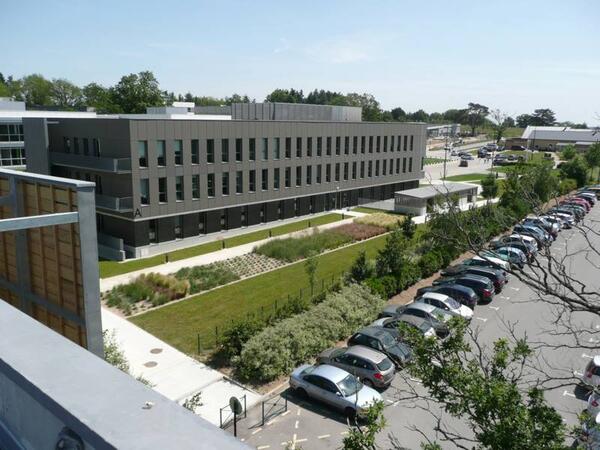
Parking Zénith P1 (free). Once parked, you can recognize the building: it's one of the tree bulding with zinc frontage.
Bicycle: free indoor parking
Public transport :
Tramway R1, Schoelcher station + 10 mn by foot through commercial center Atlantis
Tramway R1, François Mitterrand stop + bus 50, stop at Saulzaie station or bus 71, stop at the Zénith station
Tramway R3, Marcel Paul station + bus 50, Saulzaie station
Chronobus C6, Hermeland station+ bus 71, Zénith station
Bus : lignes 50 (Saulzaie station) or 71 (Zénith station)
This instructor-led, live training in Nantes (online or on-site) is targeted at beginner to intermediate developers who wish to build dynamic, modern web applications using Angular 18.
By the end of this training, participants will be able to:
Set up and configure Angular 18 projects.
Utilize Angular 18's new features and improvements, including optimized TypeScript 4.7 capabilities and zoneless change detection.
Develop robust, scalable applications using Angular 18.
Implement best practices for code organization and architecture.
This live, instructor-led training on Nantes (available online or onsite) is tailored for developers at beginner to intermediate levels who wish to harness the latest Angular 17 features for building, testing, and deploying web applications.
Upon completion, participants will be capable of:
Setting up a development environment with Node.js, Visual Studio Code, and Angular CLI.
Building a basic Angular 17 application that displays data and manages user interactions.
Structuring and reusing code via components, directives, pipes, services, and modules.
Interacting with backend services using data binding, dependency injection, routing, forms, and the HTTP client.
Streamlining common tasks like conditional rendering, looping, and handling empty collections with the new template control block syntax.
Enabling lazy-loading of content and dependencies using the new @defer control block.
Customizing inter-view animations and transitions using the new view transitions API.
Debugging and testing Angular 17 applications with tools such as Chrome DevTools, Jest, Karma, and Protractor.
This instructor-led live training in Nantes (online or onsite) is aimed at advanced-level developers who wish to master the latest features in Next.js 14, optimize performance, and implement modern React techniques.
By the end of this training, participants will be able to:
Implement advanced React hooks and concurrent features.
Understand and utilize Next.js routing strategies effectively.
Leverage Server Components, Server Actions, and hybrid rendering approaches.
Optimize data fetching, caching, and incremental static regeneration.
Use Next.js as a backend solution with Edge Functions and Edge Runtime.
Manage state using React Context, Redux, and atomic state libraries.
Optimize application performance for Web Core Vitals.
Test, monitor, and deploy Next.js applications efficiently.
This instructor-led live training in Nantes (available online or onsite) targets web developers who wish to learn how to utilize Progressive Web Application (PWA) development features to create an app-like experience on a website using Entity Framework (EF) Core and Blazor.
By the end of this training, participants will be able to:
Use the EF package to work with databases.
Use Blazor components, services, dependency injection, layout, and routing.
Create service workers to enable PWA features in an application.
Utilize push notifications and other PWA features.
Excel in scalable Vue.js development by mastering advanced reactivity, Pinia state management, and performance optimization. This instructor-led training in Nantes empowers you to construct robust, maintainable applications utilizing Vite, Quasar, TypeScript, and modern CI/CD workflows for enterprise-grade projects.
This instructor-led, live training in Nantes (offered online or on-site) is designed for intermediate Java developers who want to design, develop, deploy, and maintain microservices-based applications using Java frameworks like Spring Boot and Spring Cloud.
By the end of this training, participants will be able to:
Understand the principles and benefits of microservices architecture.
Build and deploy microservices using Java and Spring Boot.
Implement service discovery, configuration management, and API gateways.
Secure, monitor, and scale microservices effectively.
This instructor-led live training in Nantes (online or onsite) is designed for experienced developers who aim to build, deploy, and scale applications using microservices developed with NodeJS and React.
By the end of this training, participants will be able to:
Develop, deploy, and scale applications using distinct microservices.
Build a server-side rendered React application.
Deploy multi-service apps to the cloud using Docker and Kubernetes.
This instructor-led live training, held in Nantes (online or onsite), is tailored for intermediate to advanced web developers and technical architects who aim to explore the latest advancements in Next.js 14 and gain the knowledge required to develop cutting-edge web applications.
By the end of this training, participants will be able to:
Harness the full power of Next.js 14 to construct complex applications.
Apply modern features including Middleware, React Server Components, and Edge Functions.
Implement best practices to enhance performance, scalability, and SEO.
Effectively diagnose and resolve common challenges in Next.js applications.
This live training in Nantes is tailored for Java developers acquiring skills in Spring and Boot 3.5.5. It delves into core concepts such as IoC, AOP, and JPA, featuring practical exercises for constructing RESTful services, overseeing transactions, and managing data persistence with Java 21.
This instructor-led live training in Nantes (online or onsite) targets intermediate-level software developers and automation engineers seeking to build applications that communicate with PLCs and interact with SQL databases using Visual Studio.
By the end of this training, participants will be able to:
Develop .NET applications in Visual Studio for industrial automation.
Communicate with PLCs using industrial protocols such as OPC UA.
Implement database interactions with SQL Server for storing and retrieving PLC data.
Optimize application performance for real-time industrial environments.
This instructor-led, live training in Nantes (online or onsite) is designed for developers who want to utilize the newest features of Angular 13 to build, test, and deploy web applications.
By the end of this training, participants will be able to:
Use TypeScript and Angular CLI to develop Angular 13 applications.
Develop, test, and deploy Angular 13 web applications.
Create web components that can be used for any web application or page.
This instructor-led, live training in Nantes (online or onsite) is aimed at web developers who wish to use Blazor Web Assembly to build a web application.
By the end of this training, participants will be able to:
Understand forms and authentication in Blazor WebAssembly.
This instructor-led live training, offered online or onsite, is intended for developers aiming to leverage the FARM (FastAPI, React, and MongoDB) stack to build dynamic, high-performance, and scalable web applications.
By the end of this training, participants will be able to:
Set up the necessary development environment that integrates FastAPI, React, and MongoDB.
Understand the key concepts, features, and benefits of the FARM stack.
Learn how to build REST APIs with FastAPI.
Learn how to design interactive applications with React.
Develop, test, and deploy applications (front end and back end) using the FARM stack.
This instructor-led live training in Nantes (online or onsite) is designed for beginner-level developers who wish to learn the basics of Groovy Programming.
Upon completion of this training, participants will be able to:
Grasp fundamental programming concepts.
Write simple Groovy scripts and leverage core Groovy features.
Understand and apply basic object-oriented programming principles using Groovy.
Employ basic error-handling techniques to address common programming errors and exceptions in Groovy.
This instructor-led, live training in Nantes (online or onsite) is aimed at beginner-level .NET developers who wish to gain proficiency in JavaScript, Node.js, and React to actively develop and migrate systems/platforms.
By the end of this training, participants will be able to:
Write and debug JavaScript code effectively.
Build and deploy server-side applications using Node.js.
Develop dynamic and responsive user interfaces with React.
Integrate front-end and back-end components to create full-stack applications.
Understand best practices for migrating legacy systems to modern JavaScript-based platforms.
This instructor-led training, conducted online or on-site, targets developers eager to learn and utilize Livewire for building contemporary and dynamic application interfaces.
By the conclusion of this training, participants will be able to:
This instructor-led, live training in Nantes (online or onsite) is designed for intermediate-level developers who want to create micro-frontend applications using Vue.js.
By the end of this training, participants will be able to:
Gain a clearer understanding of micro-frontends.
Learn how to break down large applications into micro-frontends.
Implement micro-frontends using various approaches.
Construct micro-frontend applications with Vue.js.
This instructor-led, live training in Nantes (available online or onsite) is tailored for intermediate to advanced developers seeking to master the development of microservices using Spring Boot, Docker, and Kubernetes.
By the end of this training, participants will be able to:
Comprehend microservices architecture principles.
Build production-ready microservices using Spring Boot.
Understand the critical role of Docker in containerizing microservices.
Configure Kubernetes clusters to deploy and orchestrate microservices.
This instructor-led, live training in Nantes (online or onsite) is aimed at intermediate-level to advanced-level developers and architects who wish to develop Java native applications and microservices using Quarkus with optimized memory usage and startup time.
By the end of this training, participants will be able to:
Develop high-performance, lightweight Java native applications using Quarkus.
Build and deploy RESTful services and microservices architectures.
Use GraalVM for native compilation and optimize startup and memory efficiency.
Package and containerize applications for Kubernetes and OpenShift environments.
This live training on Nantes equips Java developers, from novice to intermediate levels, with the skills to build scalable, non-blocking applications using Spring WebFlux. Participants will master reactive programming principles, integrate databases, and deploy responsive REST APIs through immersive hands-on lab activities.
This live, instructor-led course in Nantes focuses on the essential concepts and practical applications of JavaScript, TypeScript, and full-stack development, enabling participants to acquire real-world skills aligned with current business requirements.
This instructor-led training in Nantes utilizes Unity, Blender, and Visual Studio to construct industrial virtual environments. Learners will design 3D models, optimize assets, and program C# logic for control system integration. Practical labs ensure the acquisition of essential skills in simulation and digital twin applications.
This instructor-led live training in Nantes delves into the essential principles and practical foundations of Visual Studio 2022. It aims to help participants cultivate relevant skills that translate directly to effective and consistent performance in real-world professional environments, meeting contemporary business demands.
This hands-on course on Nantes guides you in building fast, scalable network applications with Node.js. You will gain mastery over event-driven programming, streams, and error handling to produce robust, modular code. It is ideal for developers prepared to manage real-time data and enhance system reliability.
This instructor-led live training in Nantes (online or onsite) is designed for software architects and web developers who wish to utilize RabbitMQ as messaging middleware and program in Java using Spring to build applications.
By the end of this training, participants will be able to:
Develop applications using Java, Spring, and RabbitMQ.
Design asynchronous, message-driven systems using RabbitMQ.
Create and implement queues, topics, exchanges, and bindings within RabbitMQ.
This instructor-led live training in Nantes (online or onsite) is designed for developers who wish to build React components and design complex applications.
By the end of this training, participants will be able to:
Grasp advanced React concepts, including Context APIs, Higher-Order Components (HOCs), external state management, asynchronous APIs, and more.
Create composable components using React.
Implement both server-side and client-side authentication.
Utilize React and Redux libraries to manage complex stateful applications.
Streamline code and enhance application performance.
This instructor-led, live training in Nantes (online or onsite) is aimed at developers who wish to use TypeScript's advanced features to create and build JavaScript applications.
By the end of this training, participants will be able to:
Set up the necessary development environment to start developing TypeScript and Node.js applications.
Take advantage of Typescript's advanced capabilities to write clean, expressive code with fewer errors.
Configure and use Webpack with TypeScript to build complex front-end UIs.
Use custom data types (Union, Intersection, Tuple Types, etc.) to extend existing generic types.
Implement asynchronous code patterns and APIs for error handling and validating responses.
Deploy TypeScript and Node.js applications to production environments (AWS EC2, Heroku, etc.).
This instructor-led, live training in Nantes (online or on-site) is aimed at Vue JS developers who wish to create advanced components that are simpler, more flexible, and easier to maintain.
By the end of this training, participants will be able to:
Write VueJS code that is maintainable and resilient.
Write application logic that is portable and reusable.
Create customized components and widgets while avoiding unneeded complexity.
During this instructor-led live training in Nantes, participants will learn how to leverage Entity Framework Core 2.0 to create an ASP.NET Core application.
By the end of this training, participants will be able to:
Set up the necessary framework and tools for creating Entity Framework Core 2.0 MVC web applications.
Perform database operations on MS SQL Server.
Use a 'code first' and 'database first' approach to application development.
This instructor-led course on Nantes explores Apache Groovy, a dynamic JVM language that serves as a powerful complement to Java. Learners will master scripting, closures, meta-programming, and object-oriented principles while developing a sample application through interactive exercises and practical lab sessions.
This instructor-led, live training in Nantes (online or onsite) is designed for web developers who wish to use Blazor to create full-stack C# web applications.
By the end of this training, participants will be able to:
Develop web applications with C# and Blazor.
Use C# code to call JavaScript APIs and libraries.
Run client-side C# code and client logic directly in a browser or server.
This instructor-led, live training in Nantes introduces the fundamentals of Laravel and walks participants through the creation of a Laravel-based web application.
This instructor-led live training in Nantes (online or onsite) is aimed at web developers who wish to use Laravel and Vue.js for full-stack web development.
By the end of this training, participants will be able to:
Develop web applications using Laravel and Vue.js.
Gain proficiency in ASP.NET MVC 6 using Visual Studio 2015 through this hands-on course in Nantes. Master the creation of dynamic, modular, and testable websites by leveraging new APIs, building RESTful services with Web API, and developing SPAs through GruntJS, NPM, and Bower integration for modern web applications.
Advanced Development with Next.js 16 addresses advanced application architecture, App Router patterns, React Server Components, Server Actions, caching, security, and large-scale deployment.
This instructor-led, live training targets full-stack developers and React engineers who are building production-grade Next.js applications.
By the end of the course, participants will be able to:
Develop complex Next.js 16 applications leveraging the App Router, RSC, and Server Actions
Implement caching mechanisms, authentication protocols, and performance optimization strategies
Deploy and monitor production applications at scale
This instructor-led live training in Nantes (online or onsite) is aimed at developers who wish to use Quarkus to build, test, and deploy applications that are fully powered by Java but with reduced resource utilization.
By the end of this training, participants will be able to:
Set up the necessary development environment to start developing applications with Quarkus.
Build, compile, and run applications in native mode using GraalVM.
Utilize Quarkus tooling and extensions for building native applications using Maven.
Containerize, execute, and deploy applications with Docker.
This instructor-led, live training in Nantes (online or onsite) is aimed at web developers who wish to use Quasar Framework and Vue JS to create cross-platform applications.
By the end of this training, participants will be able to:
Build a cross-platform application for iOS, Windows, etc.
In this instructor-led live training conducted in Nantes, we illustrate React's power and flexibility, compare it with other frameworks, and guide participants through the step-by-step creation of their own React application.
By the end of this course, participants will be able to:
Understand React's design philosophy.
Decide when and where it makes sense to use React, and when to rethink the conventional MVC model.
Understand React concepts such as components, props, state, and lifecycle.
Implement related technologies such as Babel, Webpack, and JSX.
Build, test and deploy an interactive web application.
In this instructor-led, live training held in Nantes, participants will study the core principles and approaches of React Native while working on the development of their own mobile application for Android and iOS.
In this instructor-led, live training, participants will learn to use React Native Expo through discussion and hands-on practice. By the end of the course, participants will be equipped to create and deploy their own React Native application using React Native Expo.
This Nantes course focuses on React, Redux, and TypeScript for contemporary front-end development. You will master component architecture, state management, routing, and testing with Jest, equipping you to build scalable single-page applications with confidence and adherence to best practices.
This instructor-led live training in Nantes (online or on-site) is designed for web developers who aim to build functional front-end and back-end web applications using Spring Boot, React, and Redux.
By the end of this training, participants will be able to:
Build a front-end application with React and Redux.
Create RESTful APIs with Spring Boot.
Secure web services with Spring Security and JWT web tokens.
This instructor-led, live training in Nantes (online or onsite) is designed for Java developers looking to leverage the Spring 5 framework to build and deploy enterprise-grade web applications.
By the end of this training, participants will be able to:
Install and configure Spring 5.
Understand and implement the latest features of Spring 5.
Access databases using Spring applications.
Utilize the new reactive web framework, WebFlow, to create reactive applications.
Integrate Spring applications with legacy Java EE applications.
Test and deploy enterprise-grade Spring applications.
This practical course offers a hands-on guide to developing generative AI applications using Spring AI. Learners will gain skills in integrating and configuring AI models, crafting effective prompts, handling structured outputs and streams, and enriching applications with proprietary data through Retrieval-Augmented Generation (RAG).
Additional topics include conversation memory, AI tooling, the Model Context Protocol (MCP), monitoring, observability, security, and safeguarding, alongside standard generative AI patterns and agentic workflows. By completing practical exercises, participants will develop and enhance Spring AI applications, discovering how to combine these features to build robust, production-ready AI solutions.
This instructor-led, live training in Nantes (online or on-site) is aimed at developers and programmers who wish to use the framework changes and new features in Vue 3 to create applications.
By the end of this training, participants will be able to:
Migrate and update from Vue 2 to Vue 3.
Learn the new features to improve the development of applications.
Test and use Vue 3 to build maintainable and reliable applications.
In this instructor-led, live training in Nantes (online or onsite), participants will discover how to leverage Vue JS's incrementally adoptable architecture to construct complex single-page applications (SPAs).
Upon completion of this training, participants will be capable of:
Developing web applications that conditionally process and render data.
Creating interactive web apps that respond efficiently to user interactions.
Writing modular and reusable code.
Gradually transforming a view into a comprehensive single-page application.
Integrating VueJS into existing webpages.
Utilizing Vue's ecosystem to expand the framework's capabilities.
In this instructor-led, live training in Nantes (online or onsite), participants will acquire the essential JavaScript skills needed to leverage Vue.js's incrementally adoptable architecture to develop complex single-page applications (SPAs).
By the end of this training, participants will be able to:
Understand and utilize JavaScript and the Vue.js framework to build interactive web applications.
Design interactive web apps that respond efficiently to user events.
Write modular and reusable code.
Progressively transform a standard view into a fully-fledged single-page application.
This instructor-led, live training in Nantes (online or onsite) is aimed at developers who wish to use Vuetify.js to build beautiful interfaces for single-page applications.
By the end of this training, participants will be able to:
Install and configure Vuetify.js.
Understand the principles behind Material Design.
Create a single page application with an advanced UI using Vue.js and Vuetify.js.
This instructor-led, live training in Nantes (online or onsite) is aimed at developers who wish to use WebFlux to develop and deploy reactive applications.
By the end of this training, participants will be able to:
Install and configure Spring 5 and the WebFlux framework.
This instructor-led, live training session, available either online or onsite, is tailored for developers with beginner to intermediate skill levels who aim to build dynamic, modern web applications using Angular 2.
Upon completion of this training, participants will be able to:
Set up and configure Angular 2 projects.
Leverage the features and enhancements offered by Angular 2.
Develop robust and scalable applications using Angular 2.
Apply best practices for code organization and architecture.
Integrate Angular applications with RESTful APIs.
Read more...
Last Updated:
Testimonials (16)
Basics, which gives confidence to learn and dig more into Pyton.
Monika Yadav - KION BUSINESS SERVICES POLSKA SPOLKA Z OGRANICZONA ODPOWIEDZIALNOSCIA
Course - Python: Automate the Boring Stuff
- The course progression (from JVM internals to more high-level topics)
- Some insights from practical exercises
- Visual style (not some presentation, but a nicely styled page)
The number of users is correct. The trainer delivered the information with enthusiasm.
Alberto Rivas - SEG AUTOMOTIVE SPAIN, S.A.U.
Course - Python Programming - 4 days
Detailed explanation, re-iteration of points in a quite subtle way that really drove the knowledge home very well. Rod's willingness to double-check the odd obscure question that we rasied, to be sure that his answers were 100% right. Also, his interest in discussing the pros & cons of alternate coding styles so that we learnt not only how to use C++ in our intended way, but why it should be done that way.
Nick Dillon - cellxica Ltd
Course - Using C++ in Embedded Systems - Applying C++11/C++14
The adaptation of exos to our context and the consideration of our request
Amel Guetat - EURO-INFORMATION DEVELOPPEMENTS
Course - Fraud Detection with Python and TensorFlow
Machine Translated
It was 1-on-1 so the training was specialized to my specific needs. Shane highlighted elements of WPF/C# that could potentially be beneficial to my development projects.
Warren Nolan - Northrop Grumman
Course - Programming in WPF
Experience sharing, it's teacher's know-how and valuable.
Carey Fan - Logitech
Course - C/C++ Secure Coding
The structure of the training and the exercises were fantastic. The trainer was able to get me excited to work with Go in the future, which is not an easy thing!
Noah Van Tiggel - Spot Buy Center BV
Course - Advanced Go Programming
Very good topic structure, perfect presentation, very high level of trainer's knowlwdge. Flawless infrastructure.
Tibor Pozsgai
Course - Rust Advanced
Hands-on exercises related to content really helps to understand more about each topic. Also, style of start class with lecture and continue with hands-on exercise is good and helpful to relate with the lecture that presented earlier.
Nazeera Mohamad - Ministry of Science, Technology and Innovation
Course - Introduction to Data Science and AI using Python
scope of material
Marcin - Instytut Energetyki- Panstwowy Instytut Badawczy
Course - Visual Basic for Applications (VBA) w Excel - wstęp do programowania
the knowledge of the trainer was very high - he knew what he was talking about, and knew the answers to our questions
Adam - Fireup.PRO
Course - Advanced Java Security
Well structured. Good teaching techniques. Course well documented!
Online Programming training in Nantes, Programming training courses in Nantes, Weekend Programming courses in Nantes, Evening Programming training in Nantes, Programming instructor-led in Nantes, Programming private courses in Nantes, Programming boot camp in Nantes, Programming classes in Nantes, Programming instructor-led in Nantes, Programming coaching in Nantes, Evening Programming courses in Nantes, Online Programming training in Nantes, Weekend Programming training in Nantes, Programming one on one training in Nantes, Programming instructor in Nantes, Programming on-site in Nantes, Programming trainer in Nantes