Online or onsite, instructor-led live Software Design training courses demonstrate through interactive discussion and hands-on practice the fundamentals of Software Design.
Software Design training is available as "online live training" or "onsite live training". Online live training (aka "remote live training") is carried out by way of an interactive, remote desktop. Onsite live Software Design training can be carried out locally on customer premises in Lyon or in NobleProg corporate training centers in Lyon.
NobleProg -- Your Local Training Provider
Lyon, Swisslife Tower
NobleProg Lyon, 10 Place Charles Béraudier, Lyon, france, 69000
Located 200 meters far from the train station TGV, Swisslife Tower is today the most representative building of this quarter of Lyon. The Business Center offers you a perfect location for your training.
Gares TGV
100meters from Gare TGV Part-Dieu , porte du Rhône Exit
Aéroport
30 minutes from Lyon Saint Exupéry (Satolas)
Rhône Express from Saint Exupéry airport (Terminus Gare part-Dieu)
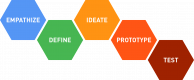
Design Thinking is a human-centered approach to problem-solving that leverages empathy, definition, ideation, prototyping, and testing. This course variant places particular emphasis on the Empathize phase, focusing on linking previously identified pain points to the actual needs of internal clients and utilizing dynamic, collaborative activities to convert insights into actionable results.
This instructor-led, live training (available online or onsite) is designed for teams and leaders at beginner to intermediate levels who aim to enhance their empathy skills, strengthen relationships with internal clients, and transform pain points into meaningful opportunities for improvement.
Upon completion of this training, participants will be able to:
Utilize empathy-based techniques to uncover and validate client needs.
Translate mapped pain points into clear, actionable requirements.
Participate in dynamic role plays and simulations to practice client-centered conversations.
Collaboratively redefine problem statements from the client’s perspective.
Course Format
Interactive lectures and guided discussions.
Engaging, hands-on role plays and empathy exercises.
Group workshops focused on collaborative problem reframing.
Course Customization Options
To request a customized version tailored to a specific internal process (e.g., procurement or equipment provisioning), please contact us to arrange.
Design Thinking is a human-centered methodology for solving problems through empathy, definition, ideation, prototyping and testing. Focusing on the first two stages — Empathize and Define — helps teams better understand internal clients and define the right problems to solve.
This instructor-led, live training (online or onsite) is aimed at beginner-level to intermediate-level teams and leaders who wish to strengthen their connection with internal clients, reduce resistance to change, and improve operational efficiency through practical, collaborative methods.
By the end of this training, participants will be able to:
Use active listening and interviewing techniques to gather meaningful insights about internal clients.
Create empathy maps and capture user needs and pain points.
Differentiate real root problems from perceived issues using tools like the 5 Whys and problem trees.
Draft clear, actionable problem statements (POVs) that guide solution work.
Format of the Course also allows for the evaluation of participants.
Interactive lecture and discussion.
Practical, hands-on exercises and role-plays.
Group workshops and plenary feedback sessions.
Course Customization Options
To request a customized version tailored to a specific internal process (e.g., procurement or equipment provisioning), please contact us to arrange.
This instructor-led, live training in Lyon (online or onsite) is aimed at beginner-level to intermediate-level professionals who wish to understand and apply Design Thinking methodologies to drive innovation and improve business solutions.
By the end of this training, participants will be able to:
Understand the core principles of Design Thinking and its role in innovation.
Apply the five phases of Design Thinking to problem-solving.
Utilize ideation techniques and tools to foster creativity.
Implement Design Thinking strategies to improve processes and enhance efficiency.
This instructor-led, live training in Lyon (online or onsite) is aimed at beginner-level to intermediate-level participants who wish to solve everyday workplace challenges through gamification techniques.
By the end of this training, participants will be able to:
Understand the principles of Design Thinking and its application to problem-solving.
Incorporate gamification techniques to foster engagement and innovation.
Develop creative and practical solutions to common workplace issues.
Collaborate effectively across teams to implement problem-solving strategies.
Apply iterative approaches to refine solutions through feedback and experimentation.
Domain-Driven Design (DDD) is a software development methodology that focuses on constructing systems centered around the business domain, leveraging a shared ubiquitous language along with strategic and tactical modeling techniques.
This instructor-led live training, available online or onsite, is designed for senior developers at an advanced level who aim to utilize DDD principles to create robust, scalable, and maintainable systems.
Upon completion of this training, participants will be able to:
Identify and model core domain concepts through the use of ubiquitous language and bounded contexts.
Implement tactical DDD patterns, including entities, value objects, aggregates, repositories, and domain services.
Design context maps and establish strategic boundaries to effectively manage complexity across teams and microservices.
Integrate DDD practices into Agile workflows and CI/CD pipelines to enhance collaboration and delivery efficiency.
Course Format
Interactive lectures and discussions.
Extensive exercises and practical application.
Hands-on implementation within a live lab environment.
Course Customization Options
To request a customized training session for this course, please contact us to arrange details.
This instructor-led live training in Lyon (online or onsite) is designed for intermediate-level developers, architects, and analysts who wish to learn and apply DDD concepts and practices to their software projects.
By the end of this training, participants will be able to:
Grasp core DDD concepts (bounded contexts, entities, etc.) and their application in software projects.
Apply strategic DDD to define and design the domain model, identify subdomains, and establish boundaries.
Implement tactical DDD using patterns such as CQRS, factories, and event sourcing.
Refactor and modernize legacy systems effectively with DDD techniques.
Design and implement product, domain, and team-oriented architectures.
Utilize data mesh to create a domain-oriented data platform supporting data discovery and governance.
This instructor-led, live training in Lyon (online or onsite) is aimed at beginner-level leaders and HR professionals who wish to learn and apply Design Thinking methodologies to foster innovation, enhance problem-solving capabilities, and engage teams effectively.
By the end of this training, participants will be able to:
Equip participants with tools and methodologies to foster innovation and team engagement.
Develop skills in empathy mapping, ideation, and prototyping for solving complex challenges.
Apply Design Thinking principles to leadership and HR scenarios.
Promote a culture of innovation within tech teams.
This instructor-led live training in Lyon (online or onsite) is aimed at intermediate-level Java developers who wish to apply design patterns to improve software structure, maintainability, and scalability.
By the end of this training, participants will be able to:
Understand the purpose and benefits of design patterns.
Apply Creational, Structural, and Behavioral patterns effectively in Java.
Improve code reusability, scalability, and maintainability.
Refactor existing codebases using design patterns.
This instructor-led, live training in Lyon (online or onsite) is designed for beginner to intermediate-level software and systems designers seeking a structured and comprehensive understanding of Sparx Enterprise Architect.
Upon completing this training, participants will be able to:
Navigate and effectively utilize Sparx Enterprise Architect, gaining a clear understanding of its interface and tools.
Create models of various business structures, such as organization charts, processes, and systems, using different diagram types.
Implement change tracking, version control, and team collaboration strategies within Sparx EA.
Leverage advanced Sparx EA features, including modeling with stereotypes, customization, and task automation.
The advancement of microservices and containers in recent years has profoundly transformed the way we design, develop, deploy, and operate software. Contemporary applications must be optimized for scalability, elasticity, fault tolerance, and adaptability to change. Meeting these new demands requires modern architectures to adopt a distinct set of patterns and practices. This training explores methods to identify, comprehend, and adapt to these evolving requirements.
Audience
This training is designed for individuals who have a basic understanding of container technology and Kubernetes concepts but may lack practical, hands-on experience. The curriculum is grounded in use cases and lessons learned from real-world projects, aiming to inspire participants to build and manage more effective cloud-native applications.
Developers
Operations personnel
DevOps engineers
QA Engineers
IT Project Managers
Course Format
Interactive lectures and discussions
Extensive exercises and practical activities
Hands-on implementation in a live-lab environment
Course Customization Options
To request a customized training session for this course, please contact us to make arrangements.
In this instructor-led live training, participants will explore the fundamental and advanced principles of software architecture and design through a series of hands-on live-lab exercises and interactive discussions.
Audience
Software professionals
Software designers
Developers
Course Format
A combination of lectures, discussions, exercises, and extensive hands-on practice
Note
To request customized training for this course, please contact us to arrange it.
The core objective of the training and workshops is to deliver knowledge, tools, and techniques that enhance the effectiveness of activities aimed at identifying business value aligned with client needs. A key focus is fostering consensus among functional, technical, and quality teams during the requirements creation process, leveraging brainstorming techniques.
Course Format
Interactive lectures and discussions.
Extensive exercises and practical applications.
Hands-on implementation in a live laboratory environment.
Customization Options
To arrange customized training for this course, please contact us.
Domain-Driven Design (DDD) is a robust software development approach that focuses on modeling complex software behaviors by aligning technical implementation with core business concepts. This course explores how DDD helps teams manage complexity and reduce risk through strategic and tactical patterns. Participants will learn to build a "Ubiquitous Language," define clear boundaries through Bounded Contexts, and use specific building blocks like Entities, Value Objects, and Aggregates. The goal is to create flexible, maintainable software architectures that remain consistent with the evolving business domain.
Numerous proven patterns are widely accessible. Often, the process involves adapting the nomenclature and implementing the pattern within a specific technology. This approach can save hundreds of hours that would otherwise be devoted to design and testing phases. Course Objectives This course has two primary objectives: first, to enable the reuse of well-established patterns, and second, to facilitate the creation and reuse of patterns tailored to your organization. It assists you in estimating how patterns can reduce costs, systematize the design process, and generate a code framework based on your patterns. Target Audience Software designers, business analysts, project managers, programmers, developers, as well as operational managers and software division managers. Course Approach The course focuses on use cases and their relationship with a specific pattern. Most of the examples are explained in UML and in simple Java examples (the language can change if the course is booked as a closed course). It guides you through the sources of the patterns as well as showing you how to catalogue and describe patterns which can be reused across your organization.
In this instructor-led, live workshop training in Lyon (online or onsite), participants will learn how to apply the five stages of Design Thinking to better understand the problems experienced by end-users of a product or service, then develop the best approach for resolving them.
By the end of this training, participants will be able to:
Use creative strategies to match customers' needs with technologically feasible solutions.
Formulate a strategy to increase customer value and enhance product and service offerings.
The Design Thinking (DT) process comprises five distinct stages: empathize, define the problem, ideate, prototype, and test.
In today's increasingly complex landscape, we encounter challenges that often require specialized approaches. Design Thinking offers a robust framework for addressing such complexity. By mastering design thinking, professionals can effectively navigate complex issues, enhance communication, persuade more efficiently, improve business outcomes, and elevate both organizational dynamics and personal performance.
Understanding DT: Learn from people and problems, identify patterns, develop a design model (noting model drift), test the model, evaluate results, and re-engineer as needed.
The connection between DT, innovation, and entrepreneurship.
DT methods and tools: personae, stakeholder maps, customer journey maps, service blueprints, and business model innovation.
Applications of DT: cultivating a design mindset, fostering disruptive innovation, adopting an iterative approach, applying agile estimation techniques, sharpening critical thinking and problem-solving skills, enhancing teamwork, preparing for leadership roles, refining communication skills, leveraging technology, thinking ahead, developing intercultural and ethical competencies, building emotional intelligence and self-awareness, negotiating effectively, and resolving conflicts.
Objectives:
Gain a solid understanding of the fundamentals and nuances of DT.
Explore key concepts, factors, theories, types, and models within DT.
Experiment with, experience, and practice DT techniques.
Delivery Format:
This one-day (4-hour) training course is structured as follows:
lectures (40% - covering theories, concepts, models, and interactive discussions),
group exercises (30% - focusing on group dynamics, games, discussions, and simulated conflict resolution),
individual activities (15% - including writing, designing, and peer feedback sessions)
and supplementary materials (15% - videos and reading assignments).
Note: Due to the collaborative nature of this course, a minimum group size of 3 participants is required.
This instructor-led, live training in Lyon (online or onsite) is aimed at intermediate-level PHP developers who wish to apply design patterns effectively in their projects.
By the end of this training, participants will be able to:
Understand the purpose and benefits of design patterns.
Identify and implement appropriate design patterns for common scenarios.
Structure PHP applications using industry-recognized best practices.
Integrate patterns into modern frameworks such as Symfony or Zend.
This instructor-led live training, available both online and onsite, is designed for C developers seeking to master the principles of embedded C design.
Upon completion of this course, participants will be capable of:
Grasping the design considerations that ensure the reliability of embedded C programs
Articulating the functionality of an embedded system
Establishing the program logic and structure required to achieve desired outcomes
This training is tailored for JavaScript developers who design and implement sophisticated Internet applications. The course focuses on imparting best practices in JavaScript programming while highlighting common pitfalls. A key aspect of the training involves exploring object-oriented programming concepts within the JavaScript syntax.
Kubernetes is an open-source platform for automating all development stages of containerized applications. Design patterns are proven solutions to recurring software development challenges within software architecture. Kubernetes extensions are used to configure and support Kubernetes clusters. By leveraging Kubernetes design patterns and extensions, users can implement CI/CD strategies while ensuring the scalability and flexibility of their software applications.
This instructor-led live training (available online or onsite) is designed for developers and DevOps engineers who want to harness Kubernetes design patterns and extensions to build enterprise-grade applications on Kubernetes clusters.
By the end of this training, participants will be able to:
Provision a Kubernetes cluster and configure essential DevOps tools.
Grasp the fundamentals of software design patterns and Kubernetes extensions.
Apply Kubernetes extensions and design patterns when working with the Kubernetes API.
Create custom Kubernetes resources and implement dynamic controllers on a cluster.
Manage and secure any Kubernetes environment using Kubernetes plugins.
Incorporate DevOps networking models into current and future Kubernetes projects.
Course Format
Interactive lectures and discussions.
Numerous exercises and practical activities.
Hands-on implementation in a live-lab environment.
Customization Options
To request customized training for this course, please contact us to arrange.
Model-Based Development (MBD) is a software development methodology that facilitates faster and more cost-effective creation of dynamic systems, such as control, signal processing, and communication systems. It emphasizes graphical modeling as opposed to traditional text-based programming.
In this instructor-led live training, participants will learn how to apply MBD methodologies to reduce development costs and accelerate time-to-market for their embedded software products.
By the end of this training, participants will be able to:
Select and utilize the appropriate tools for implementing MBD.
Apply MBD to accelerate development during the early stages of their embedded software projects.
Shorten the time required to release their embedded software to the market.
Format of the course
A blend of lectures, discussions, exercises, and extensive hands-on practice.
Microservice architecture represents an approach to building software applications as a collection of small, independent services. Each service operates within its own process and communicates via lightweight mechanisms, such as HTTP resource APIs. These services can be efficiently deployed using continuous automation systems, eliminating the need for centralized management. Additionally, microservices can be developed in various programming languages and integrated with diverse data storage solutions.
This instructor-led live training is designed for enterprise developers and architects. It introduces microservice architecture from a .Net perspective, outlines migration strategies from monolithic systems, and guides participants through the creation and deployment of a sample microservice-based application.
Upon completion of this training, participants will be able to:
Determine the appropriate contexts for utilizing and avoiding microservice architecture
Develop and implement a testing strategy for microservices
Deploy a sample microservice-based application into a production environment
Refactor a monolithic application into distinct services
Audience
Developers
Architects
Course Format
A combination of lectures, discussions, exercises, and extensive hands-on practice
This course is tailored for experienced programmers seeking to explore issues related to the use of patterns and refactoring. Each participant learns the properties and practical examples of using these patterns, which in turn will enable the efficient build correct the application code.
As distributed systems become increasingly intricate, the focus of complexity has shifted from individual systems to the architecture of entire system clusters. This course explores the connection between Software Architecture and Technical Enterprise Architecture, two domains that are closely linked yet not fully understood. For instance, decomposing a complex monolithic application into two separate systems that communicate via web services will necessitate significant adjustments to both the new systems and their inter-architecture.
Participants will examine trade-offs, prevailing patterns, and solutions for managing complex systems and their internal and external communications.
This course is designed for developers, programmers, business analysts, project managers, software architects, testers, documentation specialists, and anyone participating in the software development lifecycle.
Objectives:
Equips you to utilize a wide array of UML elements. Guides you on constructing complex UML models. Prepares you to qualify as a senior member of a UML Development Team.
Read more...
Last Updated:
Testimonials (6)
Trainer knowledge, involvement, and rapport
Adam Kuklewski - GE Medical Systems Polska
Course - Technical Architecture and Patterns
complete, subject-focused, with multiple exercises and examples
Grzegorz Sposob - ASSECO POLAND S.A.
Course - OCUP2 UML Certification - Preparing for the UML2 Intermediate exam.
The explanations and interactivity of the trainer, he really brought the subject well; and even-though I was probably not experienced enough, I did learn a lot from it!
Pieter Bruynseels - Spot Buy Center BV
Course - Design Patterns
I liked the exercises that helped to open the mind and gain new insights into software architecture.
Gabriele - EAGLEPROJECTS S.p.A.
Course - Architecture and Design: Core + Advanced Training
I liked the platform we used. It was really nice and easy to use. I liked the typescript section, the part about namespaces and modules.
Robert - DB Global Technology
Course - JavaScript - Advanced Programming
on how khoebib help everyone if there is a problem.
Kim Justine Agoncillo - Metropolitan Bank and Trust Company
Course - Microservice Patterns: Migrating from a Monolithic to a Microservice Architecture with .Net
Online Software Design training in Lyon, Software Design training courses in Lyon, Weekend Software Design courses in Lyon, Evening Software Design training in Lyon, Software Design instructor-led in Lyon, Online Software Design training in Lyon, Weekend Software Design training in Lyon, Software Design instructor-led in Lyon, Software Design private courses in Lyon, Software Design one on one training in Lyon, Software Design classes in Lyon, Software Design trainer in Lyon, Software Design coaching in Lyon, Software Design on-site in Lyon, Software Design boot camp in Lyon, Evening Software Design courses in Lyon, Software Design instructor in Lyon