Available both online and on-site, these instructor-led live Business Analysis courses utilize interactive discussions and practical exercises to demonstrate how to conduct effective business analysis.
Business Analysis training is offered as either "online live training" or "onsite live training." Online live training (also referred to as "remote live training") is conducted through an interactive, remote desktop. Onsite live training can be delivered locally at your premises in Lyon or at NobleProg corporate training centers in Lyon.
NobleProg -- Your Local Training Provider
Lyon, Swisslife Tower
NobleProg Lyon, 10 Place Charles Béraudier, Lyon, france, 69000
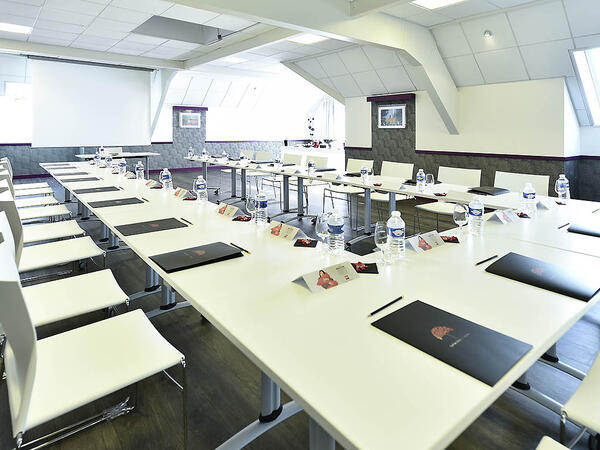
Located 200 meters far from the train station TGV, Swisslife Tower is today the most representative building of this quarter of Lyon. The Business Center offers you a perfect location for your training.
Gares TGV
100meters from Gare TGV Part-Dieu , porte du Rhône Exit
Aéroport
30 minutes from Lyon Saint Exupéry (Satolas)
Rhône Express from Saint Exupéry airport (Terminus Gare part-Dieu)
This instructor-led program in Lyon is tailored for intermediate practitioners, focusing on cost-effectiveness analysis. It guides learners through defining key questions, quantifying costs and benefits, utilizing analytical frameworks, and managing uncertainty to enable rational, evidence-based decisions across diverse sectors.
This live, instructor-led training in Lyon covers the fundamentals of the Business Analyst role, helping entry-level professionals understand core responsibilities and build practical skills aligned with industry best practices for real-world application.
This practical course in Lyon explores standard modeling languages like UML and BPMN for effectively capturing and visualizing business requirements. Participants develop hands-on competencies in creating use case diagrams, wireframes, and interactive prototypes to bolster communication within business analysis initiatives.
A practical training program in Lyon designed to help insurance professionals utilize AI, data, and InsurTech trends to modernize operations and enhance customer engagement. Through workshops, case studies, and practical exercises, it builds digital strategies for a rapidly evolving industry.
This instructor-led live training in Lyon delves into practical RE concepts, elicitation methods, and documentation strategies. It offers comprehensive exam preparation to help participants master the IREB CPRE syllabus and succeed in the Foundation Level certification.
This instructor-led, live training in Lyon (online or onsite) is aimed at business professionals who wish to learn intermediate-level skills for managing organizational charts using OrgPlus 6.
By the end of this training, participants will be able to:
Handle large data sets with sophisticated formatting tools.
Create data visualization reports and directories.
Use OrgPlus printing, exporting, and publishing features.
Designed for business analysts in Lyon, this course explores practical BPMN 2.0 elements and established patterns. Through brief lectures and practical exercises, participants develop correct diagrams for real-world challenges. The primary focus remains on analysis and process design rather than execution mechanics.
Business analysis is the process of researching, understanding, and defining business needs to develop solutions that meet those needs. It is a key element in the process of managing change within an organization and designing new business solutions. Business analysis aims to ensure that technological, process, or organizational solutions align with business goals and requirements. It is crucial for ensuring the effectiveness of projects and changes within an organization by making sure that implemented solutions are accurate, feasible, and fully aligned with business needs.
This workshop is tailored for seasoned Business Analysts, Product Owners, and User Researchers aiming to master sophisticated techniques that generate tangible business value. Through practical exercises and effective tools, participants will learn to analyze intricate data, streamline processes, engage stakeholders, and convert strategy into actionable steps using OKRs. By the conclusion, attendees will possess a definitive toolkit to enhance their impact and deliver quantifiable results.
Discover how to excel as a business analyst in Agile environments. This Lyon training covers Scrum roles, backlog management, and fostering effective collaboration with Product Owners. Develop practical capabilities through mock projects and hands-on exercises designed to reflect real-world development challenges.
This live, instructor-led training in Lyon (available online or onsite) is tailored for individuals at beginner, intermediate, or advanced levels who wish to integrate generative AI tools into the daily responsibilities of a business analyst, covering areas such as analysis, documentation, information organization, and stakeholder communication.
By the end of this program, participants will be able to:
Grasp the genuine capabilities and limitations of GenAI models, including issues like hallucinations and context windows.
Employ AI as an advanced aid for thought processes and analytical tasks.
Create precise requirement frameworks and technical documents using AI.
Speed up conceptual work, from generating hypotheses to drafting documentation.
Evaluate the quality and substantive correctness of AI-generated content with conscious judgment.
Acquire knowledge on the secure and ethical use of AI tools in relation to corporate data.
This instructor-led, live training in Lyon (online or onsite) is aimed at beginner-level, intermediate-level, and advanced-level individuals who wish to integrate Strategic Agility and Quality Assurance, ensuring that quality becomes a catalyst for strategy rather than a hurdle, and that agility is grounded in repeatable, high-quality processes.
In modern business, organizations often face a "Trade-off Paradox": the faster they try to adapt to market changes, the more their quality standards tend to slip. Conversely, rigid quality processes often slow down innovation.
Strategic Agility addresses the problem of organizational "inertia"—the inability to react to environmental volatility. Quality Assurance addresses the risks of "process decay" during rapid scaling or pivoting.
By the end of this training, participants will be able to:
This instructor-led live training in Lyon explores the core concepts and practical fundamentals of Business Analysis grounded in BABOK V3.0. It is designed to equip participants with hands-on skills that are directly applicable to real-world professional environments and contemporary business demands.
This 21-hour course in Lyon covers fundamental business analysis functions, such as needs analysis, elicitation, and requirements management. Participants will learn to identify issues, formulate effective communication plans, and validate solutions by applying industry best practices.
Develop expertise in Business Analysis via practical exercises in requirements gathering and process modeling within Lyon. Aimed at budding analysts, this curriculum addresses foundational BA capabilities, Agile and SDLC structures, and real-world applications to ensure project efficacy and measurable business results.
This one-day seminar on Lyon delves into digital business models and enterprise architecture frameworks to enhance agility. Discover how to align IT with shifting requirements by leveraging capability-based structures and case studies that connect business strategy with system design for resilient digital transformation.
This hands-on Lyon course explores the BPMN 2.0 specification and standard patterns. Participants will participate in brief lectures and practical exercises, where they design diagrams to solve specific problems. The curriculum prioritizes a thorough understanding of BPMN diagrams and their execution mechanics, incorporating assessments led by the trainer and peer group.
This hands-on training on Lyon equips analysts and designers with the core principles of BPMN 2.0. By covering flow objects, gateways, events, and pools, it fosters essential modelling skills through practical exercises. The course concludes with a workshop that applies these concepts to real-world company process scenarios.
This BPR course in Lyon guides you in utilizing UML and technology to gain a competitive advantage. Master the skills to identify dysfunctions, redesign workflows, and synchronize processes with customer expectations. Develop practical capabilities to implement radical business transformations with precision.
This business analysis course in Lyon equips entry-level professionals for the CBAP exam. It covers requirements, UML, SDLC, and project management, enabling you to design solutions that enhance efficiency, minimize costs, and successfully implement new processes.
This instructor-led, live training in Lyon (online or onsite) is aimed at beginner-level, intermediate-level, and advanced-level individuals who wish to develop skills in business and process modeling for a better understanding of the organization, products, and dependencies between processes, data, and stakeholders.
By the end of this training, participants will be able to:
Understand the role of models as key communication tools in business analysis.
Select the right modeling method (BPMN, UML, SIPOC, Business Model Canvas) for a specific business goal.
Decompose complex business processes into clear diagrams.
Identify touchpoints between processes, data, and system actors.
Assess the correctness and effectiveness of created business models.
This instructor-led, live training in Lyon (online or onsite) is aimed at beginner-level / intermediate-level / advanced-level individuals who wish to prepare to effectively plan, lead, and support organizational changes, taking into account human, communication, and process factors.
By the end of this training, participants will be able to:
Understand the psychological and structural mechanisms of organizational change.
Be able to independently plan comprehensive Change Management activities.
Identify risks and diagnose sources of resistance to change.
Be able to actively support stakeholders at every stage of the transition process.
Apply professional communication tools tailored to various audience groups.
This instructor-led, live training in Lyon (online or onsite) is aimed at beginner-level / intermediate-level who wish to use the course aims to develop the skills of conscious data analysis and translating analytical results into business conclusions and recommendations that support operational and strategic decisions.
By the end of this training, participants will be able to:
Understand the role of data in modern decision-making processes.
Be able to assess data quality and its business relevance.
Apply intermediate data analysis techniques (trends, segmentation, scenario analysis).
Distinguish between correlation and causation when interpreting results.
Formulate precise, evidence-based insights and recommendations.
Effectively communicate complex analytical findings to decision-makers.
This 14-hour Design Patterns course in Lyon teaches you to leverage proven patterns to save hundreds of hours on design and testing. You will learn to develop organization-specific patterns, assess cost savings, and structure your design process using UML and Java examples.
This instructor-led, live training in Lyon (online or onsite) is aimed at beginner-level / intermediate-level / advanced-level individuals who wish to focus on the Financial Sector andIT Industry. We move beyond simple definitions to explore how heavy regulations and risk management frameworks dictate the pace of innovation and operational decision-making. We analyze the mechanics of software delivery, the shift from legacy models to SaaS, and the critical challenges of scalability and security. We conclude by defining the evolving role of the Consultant and Analyst as a strategic bridge between business goals and technical execution.
By the end of this training, participants will transition from being "service providers" to "trusted advisors" who can anticipate industry shifts and propose solutions that resonate with the client’s specific strategic reality.
This instructor-led, live training in Lyon (online or onsite) is aimed at business professionals and data analysts with intermediate Python skills who wish to apply Python to automate workflows, analyze business data, and generate dynamic Excel-based reports.
This instructor-led, live training in Lyon (online or onsite) is designed for individuals who want to understand requirements analysis and perform it efficiently and accurately using appropriate analysis techniques for their projects.
By the end of this training, participants will be able to:
identify various types of requirements.
understand the core concepts and activities involved in requirements analysis.
become familiar with the requirements analysis methodology.
leverage different requirements analysis techniques effectively.
structure requirements to communicate efficiently with architects and developers through an iterative requirement gathering process.
This instructor-led, live training in Lyon (online or onsite) is aimed at beginner-level / intermediate-level / advanced-level individuals who wish to use comprehensive program designed to bridge the gap between identifying organizational challenges and implementing secure, data-driven solutions. This instructor-led, live training (online or onsite) is aimed at beginner-level / intermediate-level / advanced-level individuals who wish to use focus on analytical precision: moving beyond surface-level symptoms to find the root causes of business issues and structuring them for clear decision-making. Strategic foresight, teaching participants how to quantify uncertainty through formal risk assessment, evaluate potential impacts, and develop robust response strategies
By the end of the course, participants will have a toolkit for transforming vague business obstacles into actionable, de-risked project plans.
This instructor-led, live training in Lyon (online or onsite) for beginner, intermediate, and advanced levels addresses the difficulty of transforming passive or resistant observers into active, supportive partners through systematic analysis and psychological insight.
In complex business environments, project success rarely depends solely on technical execution; it relies on the support of those involved. The primary challenge in Stakeholder Management is navigating the "web of influence"—recognizing that different parties have competing priorities, varying levels of power, and subjective definitions of success. Without proactive management, projects often face "hidden blockers," sudden shifts in support, or communication breakdowns.
By the end of this training, participants will be able to:
This course in Lyon empowers managers, consultants, and analysts to effectively model business processes using UML and BPMN. Participants will gain the ability to capture existing workflows, design optimised flows, and create high-quality diagrams that connect business requirements with system design.
Read more...
Last Updated:
Testimonials (10)
the practical part
Daniela Mirevska
Course - Business Process Modelling in BPMN 2.0
The teacher clarification of the teacher about the subjects
Josildo Zangue - EMIS - Empresa Interbancaria de Servicos, S.A
Course - Business Analysis
What I like the most about the training was the detailed discussion and the Exercises.
Kevin Roi Rimpos - Century Pacific Food Inc.
Course - Business Process Re-engineering for Competitive Advantage
The trainer shared his knowledge and led great atmosphere.
Agnieszka Dubanska - Narodowy Fundusz Zdrowia
Course - Modelowanie procesów biznesowych z wykorzystaniem UML i BPMN
The explanations and interactivity of the trainer, he really brought the subject well; and even-though I was probably not experienced enough, I did learn a lot from it!
Pieter Bruynseels - Spot Buy Center BV
Course - Design Patterns
Richard is a great teacher
Federico - Circle spa
Course - BPMN 2.0 for Business Analysts
The trainer's research to quickly answer our technical or organizational questions
Emmanuel - Urssaf Rhone-Alpes
Course - Business and IT System Agility in the Digital Age
Machine Translated
the lessons
Angela - PT Andalan Teknologi Bersama
Course - Introduction to Business Analysis: Defining Successful Projects
Friendly, plenty of breaks to think about what we have learnt and lovely guy.
Leanne - Welsh Revenue Authority
Course - Agile Business Analysis
the Trainer tailored the session to our organisation and help us understand what we could be improving on.
Christopher - Department of Training & Workforce Dev.
Online Business Analysis training in Lyon, Business Analysis training courses in Lyon, Weekend Business Analysis courses in Lyon, Evening Business Analysis training in Lyon, Business Analysis instructor-led in Lyon, Business Analysis instructor in Lyon, Business Analysis private courses in Lyon, Business Analysis instructor-led in Lyon, Online Business Analysis training in Lyon, Evening Business Analysis courses in Lyon, Business Analysis boot camp in Lyon, Business Analysis trainer in Lyon, Business Analysis classes in Lyon, Weekend Business Analysis training in Lyon, Business Analysis one on one training in Lyon, Business Analysis on-site in Lyon, Business Analysis coaching in Lyon